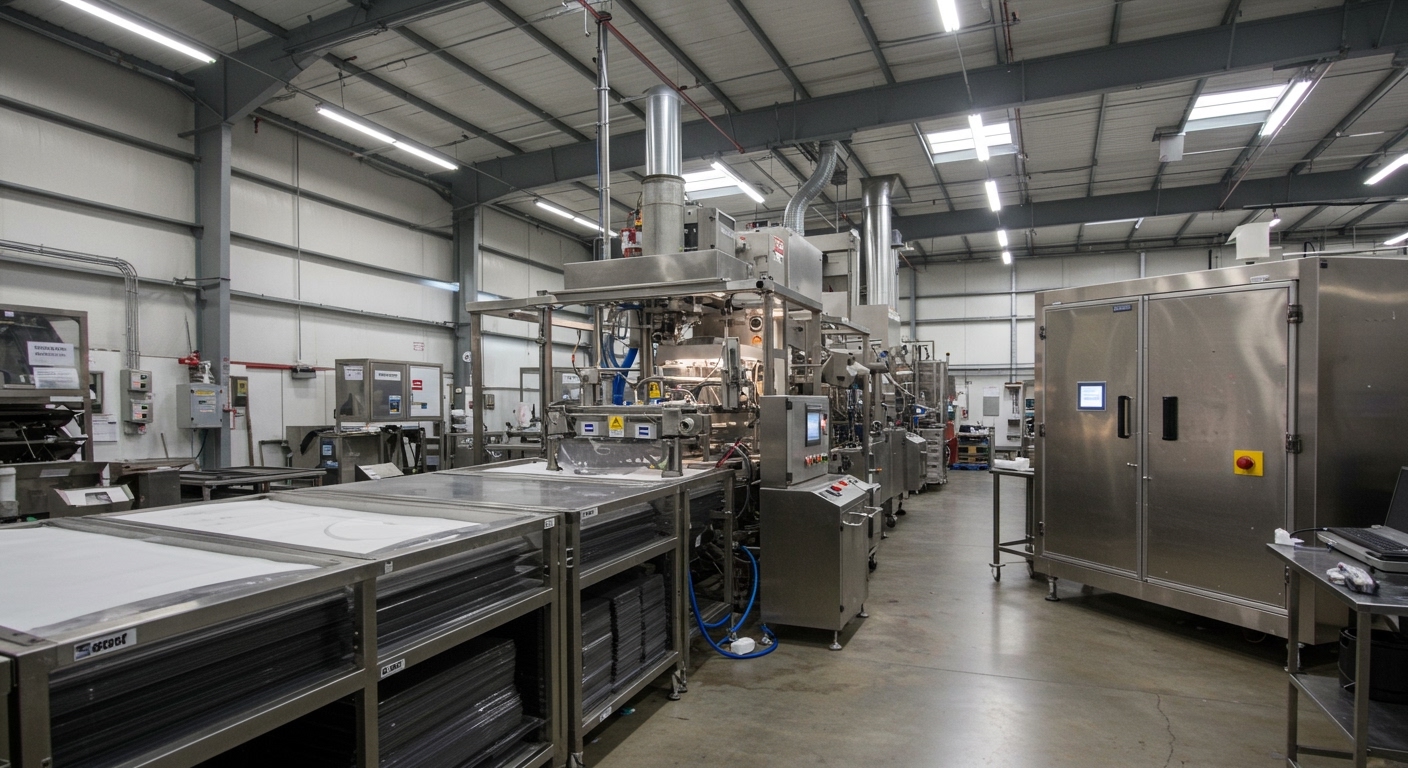
Co-packing, or contract packaging, is the process of outsourcing the final assembly and packaging of your products to a third-party specialist. For growing CPG brands, it's a critical strategy to increase output, enter new markets, and launch products without the significant capital investment of building and staffing your own production facilities.
A co-packing partnership allows you to leverage specialized equipment, operational expertise, and economies of scale that you don't have in-house. This can dramatically reduce your time-to-market and free up your team to focus on core strengths like brand building, marketing, and innovation.
Finding the right partner is the biggest challenge. You need a co-packer whose capabilities, capacity, and quality standards perfectly match your product's specific requirements. A successful partnership depends on thorough vetting, transparent communication, and shared goals for growth and operational excellence.








Key Capabilities to Evaluate
- Confirm their production lines can handle your product's specific form, whether it's liquid, powder, refrigerated, or solid. Ensure they are proficient with your required packaging formats, such as flexible pouches, glass jars, cartons, or blister packs.
- Assess their true production capacity and scheduling flexibility, not just line speed. Understand how they manage multiple clients and if they can accommodate demand fluctuations, including seasonal peaks or promotional runs.
- Investigate their quality control and assurance systems. A strong process includes raw material inspection, in-process checks, finished goods testing, and a fully traceable batch-lot coding system.
- Evaluate the value of integrated services beyond simple assembly. Many co-packers provide end-to-end solutions, including raw material sourcing, warehousing, inventory management, and direct distribution.
- Ask about their technical support and engineering resources. A good partner can help optimize your packaging for manufacturability, improve line efficiency, and troubleshoot production challenges.
Questions to Ask Suppliers
- Can you walk me through your entire process for onboarding a new client, from initial contract to the first commercial production run?
- How do you manage inventory for both client-supplied and procured materials, and what systems do you use for tracking and reporting?
- Describe your communication protocol for providing production updates, handling unexpected delays, or escalating a quality control issue.
- What is your pricing model? Please provide a breakdown of the per-unit cost, one-time setup fees, and any potential charges for services like storage or R&D.
- How do you ensure the protection of our intellectual property, including product formulations and proprietary processes?
- Can you provide anonymized performance data or case studies from clients with similar products, packaging, and volume requirements?
Red Flags to Watch For
- Lack of transparency about their production schedule, capacity, or current workload. A good partner will be open about these details to ensure a mutual fit.
- A disorganized facility or high staff turnover. These often point to deeper operational problems that can compromise management stability and product quality.
- Reluctance to allow an on-site audit or share key documentation for quality systems, maintenance logs, and certifications.
- A simplistic or one-sided contract that fails to clearly define responsibilities, liabilities, quality specifications, and material waste allowances.
- Vague answers about their traceability system. They must be able to demonstrate how they track an ingredient from receiving through to a specific pallet of finished goods.
Relevant Certifications Explained
- A Global Food Safety Initiative (GFSI) benchmarked certification, such as SQF, BRCGS, or FSSC 22000, is a must-have for many major retailers. It demonstrates a globally recognized, robust food safety management system.
- Certification for Good Manufacturing Practices (GMP) is a baseline requirement. It confirms the co-packer follows essential guidelines for sanitation, hygiene, and operations to ensure product safety and quality.
- Verify that any specialty certifications, such as Organic, Kosher, or Halal, are current. The co-packer must prove they maintain strict segregation, use dedicated cleaning protocols, and have a clear audit trail for these products.
- While not food-specific, an ISO 9001 certification signals a commitment to a formal quality management system. It's a positive indicator of a professional operation focused on continuous improvement.
Typical Lead Times and MOQ Expectations
- Minimum Order Quantities (MOQs) are set based on the co-packer's operational efficiency. Production runs must be large enough to justify setup and cleanup, ranging from thousands of units for manual lines to hundreds of thousands for automated ones.
- The initial onboarding process—from contract negotiation and trial runs to the first commercial production—is a multi-month project. You should plan for a 3-6 month timeline from initial contact to your first shipment.
- For ongoing re-orders, expect standard lead times of 4 to 12 weeks. This buffer allows for component sourcing and production scheduling, so it's critical to factor it into your demand planning.